
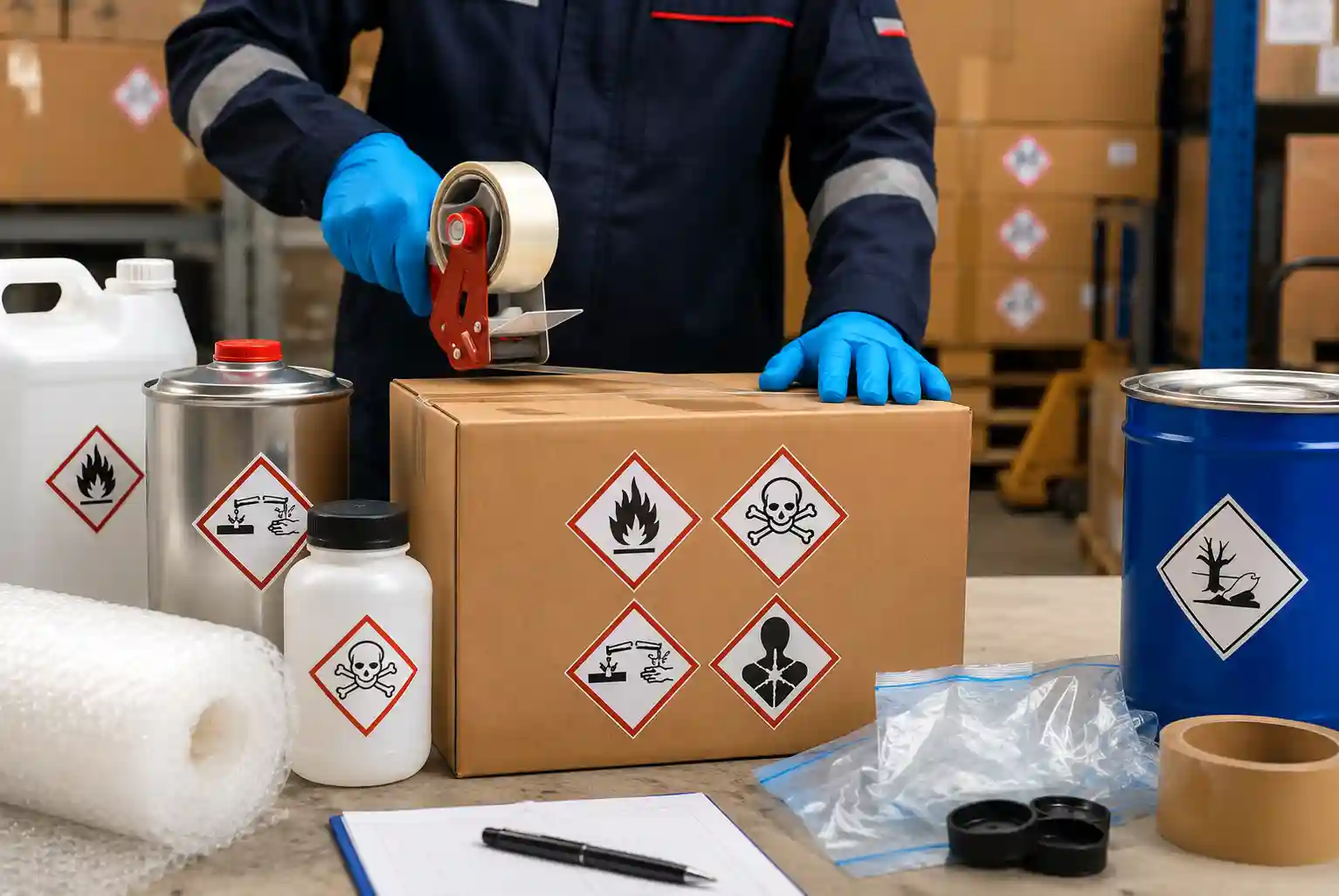
Every moving season, packers and movers across India turn away boxes filled with paint tins, gas cylinders, and half-used bottles of pesticide. This is not bureaucratic overreach. Hazardous materials behave unpredictably under heat, pressure, and vibration, and a leaking chemical or a punctured aerosol can can turn a moving truck into a serious safety hazard within minutes. Properly packing and labeling hazardous materials during a home or office relocation is not optional paperwork. It protects the people carrying your boxes, the vehicle transporting your goods, and everything else packed alongside those items. This guide explains what counts as hazardous household goods, the rules that govern their transport in India, and the exact steps to pack and label them so your move stays safe, legal, and on schedule.
What Counts as a Hazardous Material During a Move
Most people do not think of their garage or kitchen cabinet as a storage room for dangerous goods, but many everyday items fall squarely into that category once you try to transport them in a closed truck. Common examples include:
- Paints, thinners, varnishes, and adhesives
- Petrol, kerosene, and other flammable liquids
- LPG cylinders and other compressed gas containers
- Aerosols such as insect sprays, deodorants, and spray paint
- Pesticides, herbicides, and pool or garden chemicals
- Car batteries, lithium batteries, and power tool batteries
- Cleaning acids, bleach, and corrosive household cleaners
- Fireworks, matches, and other explosive or combustible items
If a substance can catch fire, explode, leak, corrode, or react with other chemicals, it must be treated as hazardous cargo, regardless of the quantity.
Why Proper Packing and Labeling of Hazardous Materials Matters
Protects the Safety of Packers and Movers
The people loading and unloading your shipment are the first ones exposed to any risk. Hazardous material labeling tells them exactly what they are handling before they open a box, so they can use the right precautions, gloves, or handling angle. Without clear labels, a mover has no way of knowing that a box contains a corrosive cleaner or a pressurised can until it is too late.
Prevents Damage to Other Belongings
A leaking bottle of chemical cleaner packed next to your electronics, clothes, or furniture can ruin everything in that box and the boxes around it. Proper hazardous material packing with leak-proof, cushioned containers keeps a single spill from turning into a total loss across your shipment.
Legal and Regulatory Compliance
Transporting undeclared or improperly packed dangerous goods is a legal offence, not just a safety lapse. Movers who accept mislabeled hazardous items without knowing it can be held liable for violations under transport and safety law, and the customer can face penalties too. Compliance with dangerous goods regulations is a shared responsibility between the mover and the person shipping the goods.
Avoids Transit Delays and Rejected Shipments
Customs officials, toll checkpoints, and interstate transport authorities routinely inspect vehicles for undeclared hazardous cargo. An unlabeled or misclassified shipment can be held, fined, or turned back entirely, delaying your entire relocation and adding unplanned costs.
Indian Regulations Governing Hazardous Goods Transport
Relocation companies operating in India work under a layered set of rules rather than a single law. Understanding these helps you see why movers ask so many questions before they accept your inventory.
- Motor Vehicles Act, 1988 and the Central Motor Vehicle Rules, which regulate the road transport of dangerous and hazardous goods within India
- The Explosives Act, 1884, which governs the storage and movement of explosive and highly flammable substances
- The Petroleum Act, 1934, which controls the transport of petrol, kerosene, and other petroleum products
- The Environment Protection Act, 1986, which addresses the handling and disposal of hazardous chemical waste
- Bureau of Indian Standards (BIS) packaging norms, which set material and construction standards for containers carrying chemicals and dangerous substances
- The IMDG Code (International Maritime Dangerous Goods Code) for sea shipments and the IATA Dangerous Goods Regulations for air shipments, both relevant for international relocation
For a purely domestic house shift, most of these rules translate into one practical outcome. Reputed packers and movers in India maintain a list of prohibited and restricted items, and they will refuse or specially handle anything that falls under these acts.
UN Hazard Classes Every Shipper Should Know
International and Indian transport rules both use the United Nations system of nine hazard classes to categorise dangerous goods. Knowing these helps you understand why certain items are restricted:
- Class 1 – Explosives
- Class 2 – Gases (compressed, liquefied, or dissolved)
- Class 3 – Flammable liquids
- Class 4 – Flammable solids
- Class 5 – Oxidising substances and organic peroxides
- Class 6 – Toxic and infectious substances
- Class 7 – Radioactive material
- Class 8 – Corrosive substances
- Class 9 – Miscellaneous dangerous goods, including lithium batteries and environmentally hazardous substances
Step-by-Step Guide to Packing Hazardous Materials Safely
- Identify and separate. Go through every room and pull out anything that fits the hazardous categories above before general packing begins.
- Check original packaging first. Manufacturer containers are usually built and labeled to the correct standard. Keep items in their original bottle or can wherever possible.
- Use UN-certified packaging for anything being shipped commercially. UN-rated fibreboard boxes, plastic drums, and jerricans are tested for pressure, drop, and stacking resistance.
- Cushion and seal properly. Wrap each container individually, use absorbent padding for liquids, and seal lids with tape so they cannot loosen during transit.
- Label clearly with the correct hazard class diamond, the contents name, and orientation arrows for anything that must stay upright.
- Segregate incompatible materials. Keep flammables away from oxidisers, and acids away from anything that reacts with them, even within the same box.
- Document everything on your shipment inventory so both you and the moving crew have a written record of what is packed where.
Common Mistakes to Avoid
- Repacking chemicals into unlabeled containers such as old water bottles
- Assuming small quantities do not need to be declared
- Packing gas cylinders or aerosols in sealed boxes without ventilation
- Mixing cleaning chemicals with clothes, books, or electronics in the same carton
- Leaving hazardous items until the last day and packing them in a rush
- Not informing the moving company in advance about chemicals, paints, or batteries in the shipment
Items Most Packers and Movers Will Refuse to Carry
Most professional movers in India maintain a standard list of restricted items for relocation. This typically includes:
- Fuel, petrol, diesel, and engine oil
- LPG and other gas cylinders
- Aerosols, spray paints, and fire extinguishers
- Pesticides, fertilisers, and corrosive household acids
- Fireworks, matches, and other explosive items
- Perishable food items that can spoil and attract pests
If your crew discovers any of these during loading, they have the right to refuse the item on the spot, which can delay the rest of your packing. Declaring these items upfront avoids last minute surprises.
Why Professional Relocation Services Can Help
Handling hazardous material relocation correctly takes more than good intentions. It takes trained staff, the right packaging materials, and up to date knowledge of what is legally permitted on the road, by rail, by sea, or by air. This is where an experienced relocation company adds real value.
At PM Relocations, a Gurgaon based relocation company operating since 1986 with ISO 9001 and FIDI FAIM accreditation, every move begins with a pre move survey that flags hazardous or restricted items before packing day. Our teams are trained to identify dangerous goods, advise you on safe disposal or separate transport options, and use compliant packaging and labeling for anything that can travel with the shipment. For international relocations, this also means coordinating with the IATA and IMDG requirements that apply to air and sea freight, so your shipment does not get held up at customs or a port of loading.
Working with a professional mover means you do not have to research regulations yourself. You get a clear list of what can travel, what cannot, and how the rest of your household goods will be protected from any risk those items pose.
Conclusion
The importance of properly packing and labeling hazardous materials comes down to three things: safety for the people handling your move, protection for your other belongings, and compliance with the law. Before your next relocation, sort out anything flammable, corrosive, pressurised, or chemical, check it against your mover’s restricted items list, and pack what remains in certified, clearly labeled containers. Where the item cannot travel at all, arrange separate, compliant disposal or transport rather than hiding it in a box. A little preparation here prevents accidents, fines, and damaged goods, and keeps the rest of your move running on schedule.
Frequently Asked Questions
1. What items are considered hazardous materials during a house move?
Paints, solvents, fuel, gas cylinders, aerosols, pesticides, batteries, and corrosive cleaning chemicals are the most common hazardous household items flagged during relocation.
2. Can packers and movers legally refuse to carry hazardous items?
Yes. Movers have the legal right to refuse hazardous or undeclared dangerous goods, and accepting them knowingly can expose the company to liability under Indian transport law.
3. How should I label a box containing hazardous materials?
Use the correct UN hazard class diamond, write the contents clearly on at least two sides of the box, and add orientation arrows if the item must stay upright.
4. Do small quantities of chemicals still need to be declared?
Yes. Quantity does not remove the risk. Even a small bottle of corrosive cleaner or a single aerosol can needs to be declared and packed correctly.
5. What happens if hazardous materials are hidden in regular boxes?
It can lead to damaged belongings, injury to the moving crew, fines, and in serious cases, the seizure of the shipment at a checkpoint or port.
6. Are lithium batteries considered hazardous for shipping?
Yes. Lithium batteries fall under UN Class 9, miscellaneous dangerous goods, and require specific packaging, especially for air and sea freight.
7. How far in advance should I tell my mover about hazardous items?
Ideally during the pre move survey, well before packing day, so the team can plan safe handling, separate transport, or disposal options in time.
8. Does international relocation have different hazardous goods rules?
Yes. International moves must also comply with the IATA Dangerous Goods Regulations for air freight and the IMDG Code for sea freight, in addition to Indian domestic transport law.