
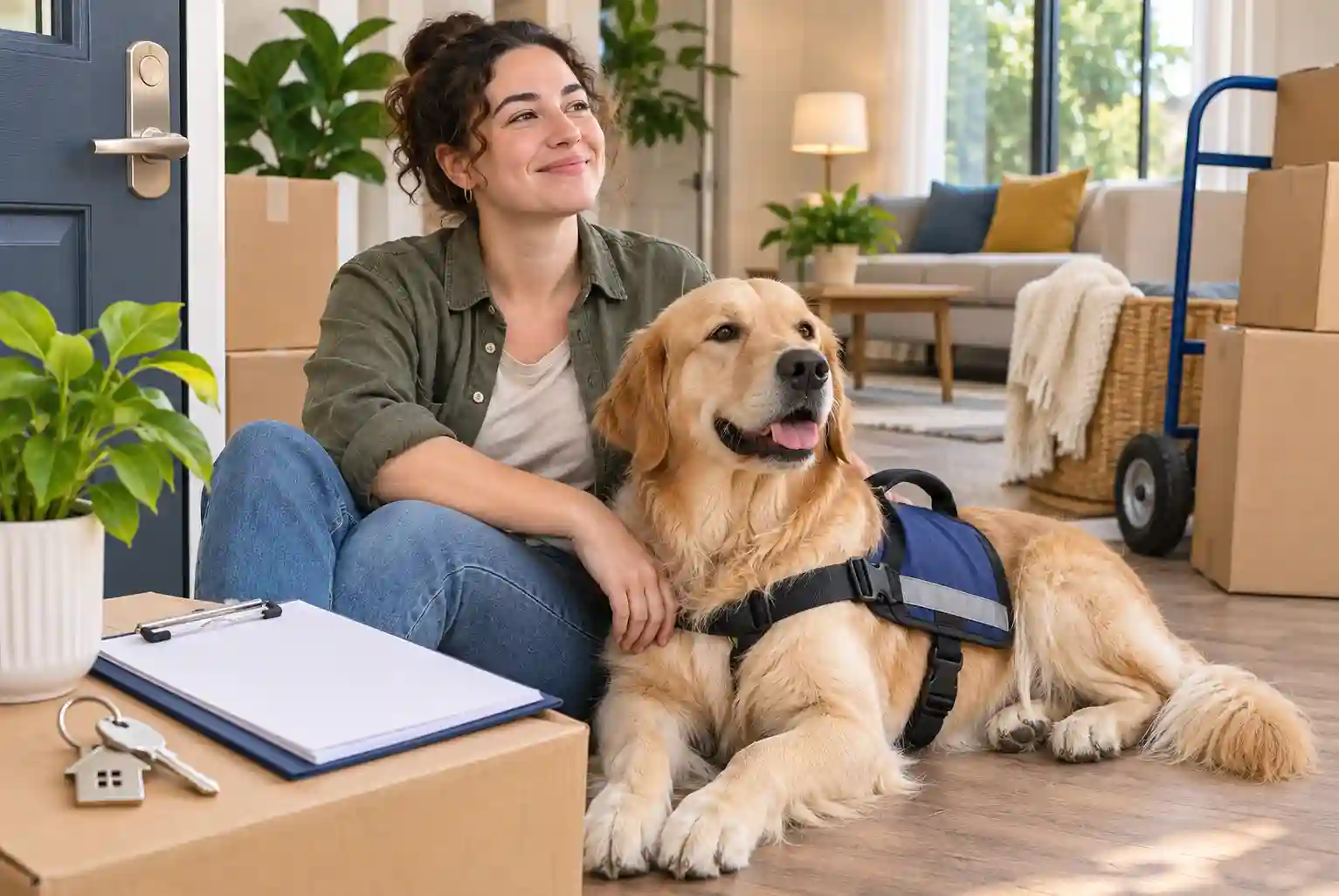
Relocating to a new home is stressful for anyone. When you rely on a trained service animal, shifting cities or houses brings extra questions about travel rules, housing permissions, and safety. You might worry about whether landlords, airlines, or housing societies will allow your helper animal inside. This guide explains everything you need to know about moving with a service animal in India. We cover your legal rights, required relocation documents, travel rules for flights and trains, estimated costs, and simple tips to keep your animal calm. Whether you are planning a local shift or an intercity move with trusted packers and movers in India, following these steps helps you plan a smooth, safe, and worry-free move for both you and your loyal companion.
What Is a Service Animal?
A service animal is a dog individually trained to do specific work or perform tasks for a person with a disability. Common examples include guide dogs for blind people, hearing dogs for deaf individuals, and mobility-assistance dogs that help wheelchair users open doors or pick up dropped items.
It is important to know the difference between a service animal and an emotional support animal (ESA). An ESA provides comfort just by being there and does not need special task training. Because service dogs undergo advanced, specialized training, they receive much stronger legal protections during travel and housing shifts.
Legal Rights When Moving With a Service Animal in India
Understanding service animal legal rights helps you stand firm if someone tries to block your move. In India, several laws and rules protect persons with disabilities and their trained animals.
1. Housing and RWA Rules
- The Rights of Persons with Disabilities (RPwD) Act, 2016: This law protects people with disabilities from discrimination and ensures equal access to housing and public spaces.
- Animal Welfare Board of India (AWBI) Guidelines: Under AWBI rules, Resident Welfare Associations (RWAs) and housing societies cannot ban residents from keeping dogs or impose unfair bans on lift usage.
- Landlord Agreements: Always inform your landlord before signing the rent agreement. Share your dog’s training certificate so there are no surprises on moving day.
2. Air Travel Regulations (DGCA Rules)
According to the Directorate General of Civil Aviation (DGCA) Civil Aviation Requirements (CAR), scheduled Indian airlines must allow trained service animals to travel inside the aircraft cabin free of charge.
- Your dog sits at your feet on a leash or harness and does not get a separate seat.
- Airlines usually ask for 48 to 72 hours of advance notice before your flight.
- Carriers often cap the number of service animals per flight (usually 2 to 4), so book early.
3. Indian Railways Guidelines
If you are relocating by train, Indian Railways allows pets and service animals with proper paperwork.
- You can travel with your dog inside a First Class AC (1A) coupe or cabin if you book the entire compartment and get prior approval from the Station Master or Chief Reservation Officer.
- Medium and large dogs cannot travel in AC 2-Tier, AC 3-Tier, or Sleeper coaches. If a coupe is unavailable, they travel in the guard’s brake van (dog box), though handlers should push for coupe approval so the dog stays with them.
Essential Documents Required for Relocation
Keep a clear folder with both physical and digital copies of these pet relocation documents before you start your journey:
- Service Animal Training Certificate: Proof from an accredited body (such as Saksham Trust, India Guide Animals Foundation, or an Assistance Dogs International member) showing your dog is trained for specific tasks.
- Veterinary Health Certificate (Fit-to-Travel): A signed letter from a registered vet confirming your dog is healthy and free from contagious diseases. For flights, this must be issued within 10 days of travel. For trains, it is usually required within 48 hours of departure.
- Vaccination Record Book: Updated proof of all shots, especially the anti-rabies vaccine given at least 30 days prior to travel.
- Disability Certificate and ID Proof: Your government-issued UDID card or disability certificate, along with your Aadhaar card or passport.
- Microchip Details: While optional for domestic road trips, a microchip number is helpful for identification and mandatory for international moves.
Step-by-Step Timeline for a Smooth Move
Following a simple relocation timeline prevents last-minute panic for you and your animal.
4 Weeks Before Moving
- Inform your new landlord or housing society about your service animal and share copies of your certificates.
- Book your flight or train tickets and contact the airline’s special-assistance desk.
- Research veterinary clinics near your new home in cities like Bengaluru, Mumbai, Delhi NCR, or Pune, and schedule your domestic household shifting
1 to 2 Weeks Before Moving
- Pack a separate travel kit for your dog. Include food, water bowls, waste bags, medications, a favorite toy, and an unwashed blanket that smells like home.
- Keep your dog’s daily feeding and walking schedule steady while packers pack your boxes.
48 to 72 Hours Before Moving
- Visit your vet to get the Fit-to-Travel certificate.
- Confirm your bulkhead seat on the flight or your First Class AC coupe reservation on the train.
- Arrange for a trusted friend or family member to watch your dog while heavy furniture is being loaded onto the truck.
Moving Day
- Feed your dog a light meal 2 to 3 hours before travel to avoid motion sickness.
- Take your dog for a long walk to burn energy before boarding a flight, train, or car.
- Put a visible service animal vest or harness on your dog so staff and neighbors recognize their working role.
Estimated Costs and Pricing Factors
While airlines carry trained service animals in the cabin for free, other parts of pet and household relocation come with costs. You can also check our packers and movers cost guide to plan your overall shifting budget:
| Expense Item | Estimated Cost (INR) | Notes |
| Airline Cabin Fee (Service Dog) | ₹0 (Free) | Requires valid training and vet certificates |
| Vet Checkup & Health Certificate | ₹500 – ₹1,500 | Needed within 48 hours to 10 days of travel |
| Indian Railways 1A Coupe / Luggage Ticket | ₹1,500 – ₹5,000+ | Depends on distance and coupe ticket cost |
| IATA-Approved Travel Crate (if needed) | ₹4,000 – ₹15,000 | Based on the dog’s size and weight |
| Professional Pet Relocation (Door-to-Door) | ₹15,000 – ₹40,000+ | Covers road taxi, paperwork, and handler support |
Practical Tips and Common Mistakes to Avoid
Even well-trained dogs feel stress when their home disappears into cardboard boxes. Keep these safety tips and common mistakes in mind:
Essential Safety Tips for Moving Day
Set Up a Quiet Safe Room
On packing day, place your dog in a quiet, empty room with fresh water and familiar bedding. Tape a clear sign on the door telling movers not to enter so your dog stays relaxed.
Settle Your Dog First at the New Home
Before unpacking your kitchen or bedroom, set up your dog’s bed, water bowl, and toys in one corner of the new house. This gives them an instant safe zone.
Update ID Tags Immediately
Put a new tag on your dog’s collar with your updated address and active mobile number before you step outside your new building.
Common Mistakes Handlers Should Avoid
Avoid Giving Sedatives Before Flights
Never give sleeping pills or sedatives to your dog before a flight unless a vet specifically prescribes them for a medical issue. Sedatives can affect breathing and balance at high altitudes.
Do Not Wait Until the Last Minute
Showing up at an airport or railway station without prior approval can lead to denied boarding. Always confirm reservations at least 72 hours ahead.
Why Professional Relocation Services Can Help
Managing your own disability needs, your service animal, and an entire household shift at the same time is exhausting. Hiring PMRGO professional packers and movers takes the heavy physical burden off your shoulders so you can focus entirely on your health and your dog.
Here is how reliable relocation services make the process smoother:
- Professional Packing: Trained crews pack fragile glassware, electronics, and furniture quickly using sturdy boxes, reducing the days of chaos around your dog.
- Safe Loading and Unloading: Movers handle bulky appliances and heavy beds safely, keeping hallways clear so your service dog does not trip or get hurt.
- Door-to-Door Service: Your household goods move directly from your old doorstep to your new rooms without you having to lift a single box.
- Dedicated Transportation and Tracking: Reputable companies use closed-body trucks with GPS tracking—and if you also need to shift your personal car or bike, vehicle transportation services ensure your vehicle reaches safely alongside your household items.
- Documentation and Insurance Assistance: Movers provide clear inventories, GST bills, and transit insurance options to protect your valuables against accidental damage.
- Reduced Stress: When experts manage the logistics, your anxiety drops—and since service animals closely mirror their handler’s mood, your dog stays calmer too.
Frequently Asked Questions
1. Are airlines in India allowed to charge extra for a service animal?
No. Under DGCA regulations, scheduled Indian airlines must carry trained service animals inside the passenger cabin free of charge for persons with disabilities. You must notify the airline at least 48 to 72 hours ahead and present valid training and veterinary certificates.
2. Can a landlord or RWA refuse housing when moving with a service animal?
No. Under the Rights of Persons with Disabilities Act, 2016 and Animal Welfare Board of India (AWBI) guidelines, housing societies and RWAs cannot ban residents from keeping dogs or deny lift access. Sharing your dog’s official training certificate with the landlord helps prevent misunderstandings.
3. What documents are mandatory for moving with a service animal?
You need four main documents: an accredited service animal training certificate, a veterinary Fit-to-Travel certificate issued within 48 hours to 10 days of travel, an updated vaccination record (including anti-rabies), and your government-issued disability ID card.
4. Can my service dog travel with me on Indian Railways?
Yes. You can travel with your service dog in a First Class AC (1A) coupe or cabin by booking all berths in that compartment and getting prior permission from the Chief Reservation Officer. Dogs are not allowed in Sleeper or AC 2-Tier and 3-Tier coaches.
5. How do I keep my service animal calm on packing day?
Keep your dog in a quiet, closed room away from loud tape guns and heavy lifting. Leave their familiar bed, water bowl, and favorite toy inside. Stick to their normal feeding and walking times so their routine feels safe and predictable.
6. Is an emotional support animal given the same rights as a service dog?
No. In India, emotional support animals (ESAs) do not undergo specialized task training, so they do not get automatic free cabin access on flights or public access rights. Airlines treat ESAs as regular pets, which require standard pet cargo or cabin fees.
Conclusion
Moving with a service animal becomes much easier when you know your rights and prepare your paperwork early. Under Indian rules like the RPwD Act, 2016 and DGCA guidelines, trained service dogs have strong protections for housing and air travel. Always gather your training and vet certificates ahead of time, notify airlines or railways early, and keep your dog’s daily routine steady during packing. By booking your move with PMRGO relocation experts to handle the heavy lifting while you focus on your companion, you can settle into your new home safely and with peace of mind.