
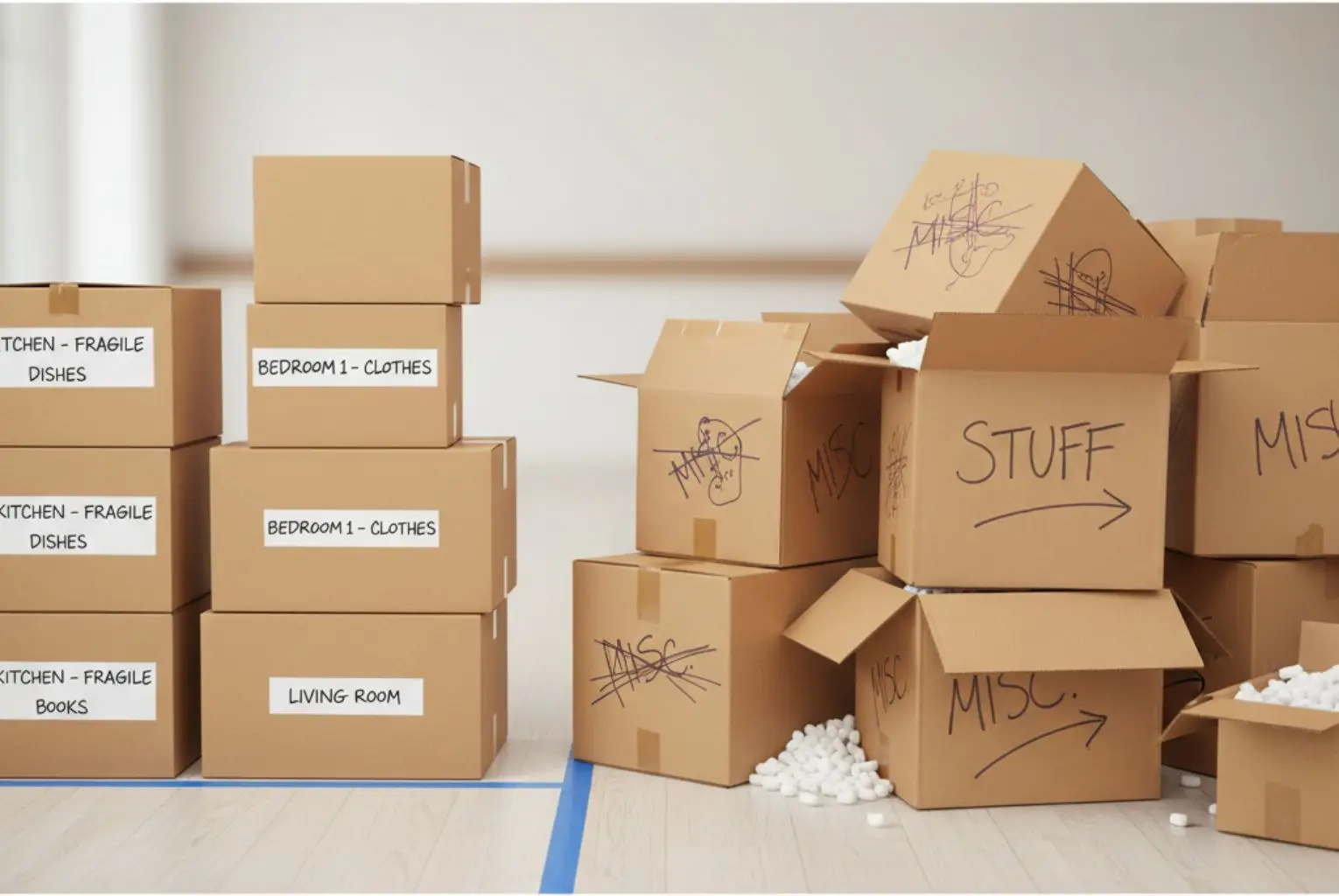
Moving to a new home can be one of life’s most stressful experiences, but proper labeling moving boxes can transform chaos into order. Whether you’re relocating across town or across the country, implementing effective moving box labeling tips will save you countless hours of frustration and ensure your belongings arrive safely at their destination. This comprehensive packing and labeling guide will walk you through the essential dos and don’ts of moving boxes to make your relocation as smooth as possible.
Why Proper Labeling Matters During a Move
Before diving into the specifics of how to label moving boxes, it’s crucial to understand why this step is so important. Proper labelling is more than just writing a few words on a box – it’s about creating a systematic approach to organizing moving boxes that will benefit you throughout the entire moving process.
Saves Time During Unpacking
When you arrive at your new home, you’ll be eager to settle in quickly. Well-labeled boxes allow you to prioritize unpacking based on your immediate needs. Instead of opening every box to find your coffee maker or essential toiletries, clear labels will guide you directly to what you need. This simple moving organization hack can reduce your unpacking time by up to 50%.
Prevents Damage to Fragile Items
Proper labeling helps protect your valuable possessions by alerting movers and helpers to the presence of fragile contents. When boxes are clearly marked with handling instructions, the likelihood of damage decreases significantly. This is particularly important for items such as dishes, electronics, or artwork that require special care during transportation.
Makes Moving Day More Organized
A well-organized labeling system creates a smooth flow on moving day. Professional movers can quickly identify where each box belongs, reducing confusion and ensuring items end up in the correct rooms. This organization also helps you maintain control over the process and reduces the stress of coordinating multiple helpers.
The Dos of Labeling Moving Boxes
Following these best practices for labeling boxes when moving will set you up for success and make your entire moving experience more manageable.
Use Clear, Legible Markers
Always use bold, permanent markers that won’t fade or smudge during transport. Black or dark blue markers work best as they provide maximum contrast against most box surfaces. Avoid using pens or pencils, which can be difficult to read and may fade over time. Invest in quality markers – this small expense will pay dividends in clarity and durability.
Label on Multiple Sides of the Box
One of the most effective packing and moving tips is to label boxes on at least two sides – preferably the top and one side. This ensures visibility regardless of how the box is stacked or positioned. When boxes are loaded into a truck or storage unit, you’ll still be able to identify contents even when the top isn’t visible.
Be Specific with Room Names and Contents
Instead of writing vague descriptions like “kitchen stuff,” be specific: “Kitchen – Pots, Pans, and Cooking Utensils.” This level of detail helps both during the move and when unpacking. Consider including the number of items when relevant, such as “Bedroom – 6 Shirts, 3 Sweaters, Winter Clothing.”
Color-Code or Number Your Boxes
Implementing a color-coding system is one of the most effective moving organization hacks. Assign each room a specific color and use colored tape or stickers accordingly. Alternatively, number your boxes and maintain a master inventory list. This systematic approach makes tracking and organizing significantly easier.
Mark Fragile and Heavy Boxes Clearly
Use bold, prominent labels for fragile items with words like “FRAGILE,” “HANDLE WITH CARE,” or “THIS SIDE UP.” Similarly, mark heavy boxes clearly to prevent injury during lifting. Consider using bright colored tape or stickers to make these warnings more visible from a distance.
Keep an Inventory List Along with Labels
Create a detailed inventory list that corresponds with your box numbers or color codes. This master list should include the box identifier, room destination, and detailed contents. Keep both physical and digital copies of this list – it’s invaluable for insurance purposes and helps track everything during the move.
The Don’ts of Labeling Moving Boxes
Avoiding these common box labeling mistakes to avoid will prevent confusion and frustration during your move.
Don’t Use Faint Pens or Pencils
Light-colored pens, pencils, or faded markers are among the worst choices for labeling moving boxes. These marking tools can become illegible during transport, especially if boxes get wet or dirty. Always opt for bold, permanent markers that maintain their clarity throughout the moving process.
Don’t Write Only on the Top of Boxes
Labeling only the top of boxes is a critical mistake. Once boxes are stacked, these labels become invisible, making identification impossible without moving other boxes. This oversight can significantly slow down both the moving and unpacking processes.
Don’t Be Too Vague with Descriptions
Vague labels like “miscellaneous” or “random stuff” defeat the entire purpose of labeling. These non-descriptive labels provide no useful information and can lead to endless searching when you need specific items. Always aim for clarity and specificity in your descriptions.
Don’t Overlook Priority Items
Failing to clearly mark priority boxes containing essential items is a common oversight. These boxes should contain items you’ll need immediately upon arrival, such as medications, basic toiletries, phone chargers, and a change of clothes. Mark these boxes with “OPEN FIRST” or “PRIORITY” labels.
Don’t Forget to Label Hazardous or Perishable Items
Special items like cleaning supplies, batteries, or perishable goods require special handling and clear labeling. Movers may have restrictions on transporting certain hazardous materials, so proper labeling helps identify these items quickly and ensures they’re handled appropriately.
Smart Labeling Techniques for Extra Efficiency
These advanced moving organization hacks can take your labeling system to the next level.
Color-Coding by Room or Category
Assign specific colors to each room or category of items. For example, use blue for kitchen items, red for bedroom belongings, and green for office supplies. Apply colored tape or stickers to boxes along with written labels for instant visual identification. This system is particularly helpful for movers and family members who may not be familiar with your written organization system.
Using Digital Labeling Apps and QR Codes
Modern technology offers innovative solutions for organizing moving boxes. Several smartphone apps allow you to photograph box contents and generate QR codes that link to detailed inventories. Simply attach the QR code to each box, and anyone can scan it to see exactly what’s inside. This high-tech approach is especially useful for long-distance moves or when using professional moving services.
Numbering Boxes and Creating a Master List
Assign each box a unique number and maintain a comprehensive master list with corresponding details. This system works well in conjunction with color-coding and provides a backup method for identifying contents. Number your boxes sequentially and keep your master list in multiple locations – with you, in your car, and digitally stored in the cloud.
Common Mistakes People Make When Labeling Boxes
Learning from others’ experiences can help you avoid these frequent box labeling mistakes to avoid.
Forgetting Essential Details
Many people remember to label the general contents but forget crucial details like “urgent,” “fragile,” or “this side up.” These details are often more important than the basic contents description and can prevent damage or delays in accessing important items.
Relying on Memory Instead of Proper Labels
Assuming you’ll remember what’s in each box is a dangerous gamble. Even with the best intentions, the stress and chaos of moving can make it impossible to recall the contents of dozens of boxes. Proper labeling eliminates the guesswork and reduces stress significantly.
Mislabeling or Mixing Fragile Items with Heavy Items
Accidentally placing fragile items in boxes marked as heavy (or vice versa) can lead to improper handling and damage. Always double-check your labels against the actual contents, and never mix fragile items with heavy objects in the same box.
Final Tips for Stress-Free Box Labeling
These additional packing and moving tips will help ensure your labeling system works flawlessly.
Start Early, Don’t Rush
Begin your labeling moving boxes process well before moving day. Rushed labeling often leads to mistakes, illegible writing, and missed details. Start packing and labeling room by room several weeks before your move to ensure thoroughness and accuracy.
Keep Labeling Supplies Handy
Maintain a dedicated moving supply kit with multiple permanent markers, colored tape, labels, and a notebook for inventory tracking. Keep these supplies easily accessible as you pack so you’re never tempted to skip labeling due to inconvenience.
Double-Check Labels Before Sealing
Before sealing each box, take a moment to verify that your labels accurately reflect the contents and that all necessary handling instructions are clearly marked. This final check can prevent confusion and ensure your moving organization hacks work as intended.
Conclusion
Effective labeling moving boxes is one of the simplest yet most impactful steps you can take to ensure a smooth, stress-free move. By following these dos and don’ts of moving boxes, you’ll create an organized system that saves time, prevents damage, and reduces the overwhelming nature of relocating.
Remember the key principles: use clear, permanent markers on multiple sides of each box, be specific with your descriptions, implement a color-coding or numbering system, and maintain detailed inventory lists. Avoid common mistakes like using faint writing tools, being too vague with descriptions, or relying on memory instead of proper labels.
Smart moving box labeling tips like color-coding, digital apps with QR codes, and systematic numbering can elevate your organization to professional levels. Most importantly, start early and don’t rush the process – proper planning and execution of your labeling system will transform what could be a chaotic experience into an organized, manageable transition to your new home.
With these strategies in place, you’ll find that organizing moving boxes becomes second nature, and your future self will thank you when unpacking becomes a breeze rather than a burden.