Introduction
Relocation is a challenging process that becomes even more complex when you need to transport delicate belongings like plants. Whether you’re planning a local move or an interstate relocation, your beloved plants require special attention to survive the moving journey. Professional packers and movers understand that plants are living entities that can easily get damaged during transportation. Here’s a comprehensive guide to help you safely relocate your green companions during your household shifting.
Pre-Move Planning and Preparation
1. Check Legal Requirements and Regulations
Before you begin planning your plant relocation, it’s crucial to research the legal requirements of your destination. Many states and countries have strict regulations about transporting plants across borders due to disease control and environmental protection measures.
Contact the agricultural departments or moving authorities in your destination area to understand:
- Which plants are permitted for interstate moves
- Required documentation or permits
- Quarantine regulations
- Prohibited species
If certain plants aren’t allowed, consider gifting them to friends or family rather than risking legal complications during your relocation process.
2. Plant Health Assessment and Maintenance
Disease and Pest Inspection
Several weeks before your moving day, conduct a thorough inspection of all plants you plan to transport. Professional movers recommend this step to prevent spreading diseases or pests to your new location.
Look for:
- Signs of fungal infections
- Insect infestations
- Diseased or dying foliage
- Root problems
Treat any issues immediately or consider leaving severely affected plants behind to protect your other plants during the moving process.
Pruning and Trimming
Proper pruning is essential for successful plant transportation. Experienced packers and movers suggest trimming your plants 2-3 weeks before the move to:
- Reduce overall size for easier packing
- Remove dead or damaged parts
- Minimize stress during relocation
- Prevent breakage during transportation
For plants with long, flexible stems or leaves, gently tie them with soft cloth strips to prevent damage during the moving journey.
Watering and Care Protocol
3. Optimal Watering Schedule
Water management is critical when preparing plants for relocation. Moving companies with plant transport experience recommend:
One Week Before Moving:
- Reduce watering frequency gradually
- Allow soil to dry slightly but not completely
2-3 Days Before Moving:
- Water plants lightly to maintain moisture
- Avoid overwatering to prevent root rot
- Ensure proper drainage
Day of Move:
- Check soil moisture levels
- Add minimal water if absolutely necessary
- Remember that transportation creates stress, and overly wet soil can cause fungal problems
Moving Day: Professional Packing and Transportation
4. Strategic Packing Techniques
Professional packers and movers use specific techniques for plant transportation:
Packing Materials
- Use sturdy, ventilated boxes
- Line boxes with newspaper for cushioning
- Secure pots to prevent tipping
- Create air holes for proper ventilation
Timing
- Pack plants last, just before loading
- Unpack plants first at your destination
- Minimize time spent in dark, enclosed spaces
Temperature Control
- Avoid extreme temperatures during moving
- Use climate-controlled vehicles when possible
- Keep plants away from heating/cooling vents
5. Communication with Your Moving Company
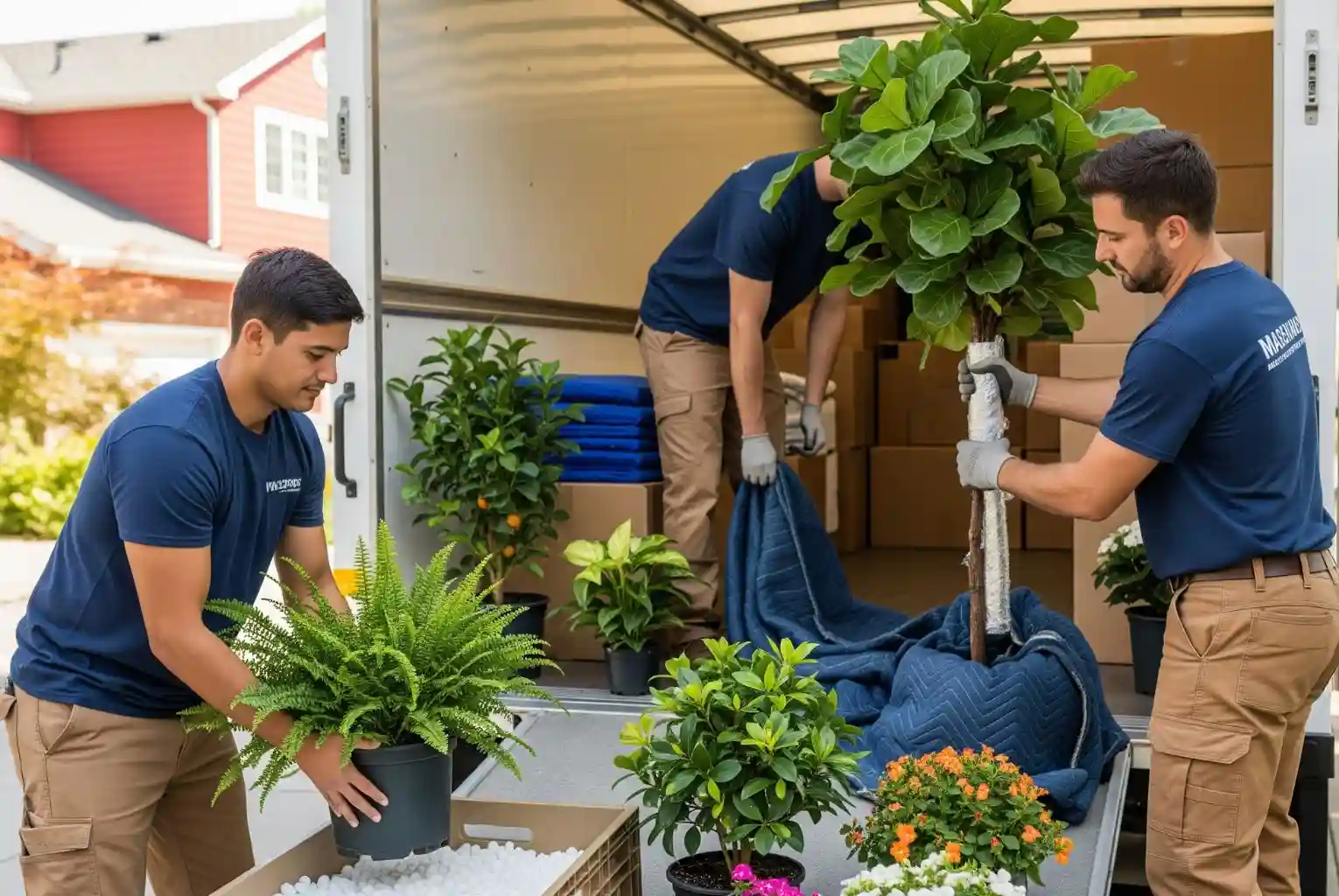
When hiring packers and movers, clearly communicate your plant transportation needs:
- Inform them about the number and size of plants
- Discuss packing services for delicate specimens
- Arrange for proper placement in the moving truck
- Confirm their experience with plant relocation
- Ask about insurance coverage for live plants
Post-Move Plant Care
Recovery and Acclimatization
After your household shifting is complete:
- Unpack plants immediately upon arrival
- Place them in indirect light initially
- Resume normal watering gradually
- Monitor for signs of stress or damage
- Allow 2-4 weeks for full acclimatization
Alternative Solutions
When Transportation Isn’t Feasible
Sometimes, despite your best efforts, certain plants may not survive long-distance moving. Consider these alternatives:
- Gifting: Share plants with friends and family
- Selling: Offer plants to local gardening communities
- Propagation: Take cuttings to grow new plants at your destination
- Professional Plant Moving Services: Some specialized moving companies offer dedicated plant transportation services
Conclusion
Successfully moving plants requires careful planning, proper preparation, and coordination with experienced packers and movers. By following these guidelines and working with professional moving services that understand plant transportation requirements, you can ensure your green companions survive the relocation process and thrive in their new environment.
Remember that each plant species has unique needs, so research specific requirements for your particular plants. With proper care and professional assistance, your household shifting can include all your beloved plants, making your new house feel like home from day one.
For the best results, choose packers and movers with proven experience in handling delicate items and specialty relocation services that prioritize the safe transport of your precious plants.